
High-Efficiency Electrocatalytic Equipment
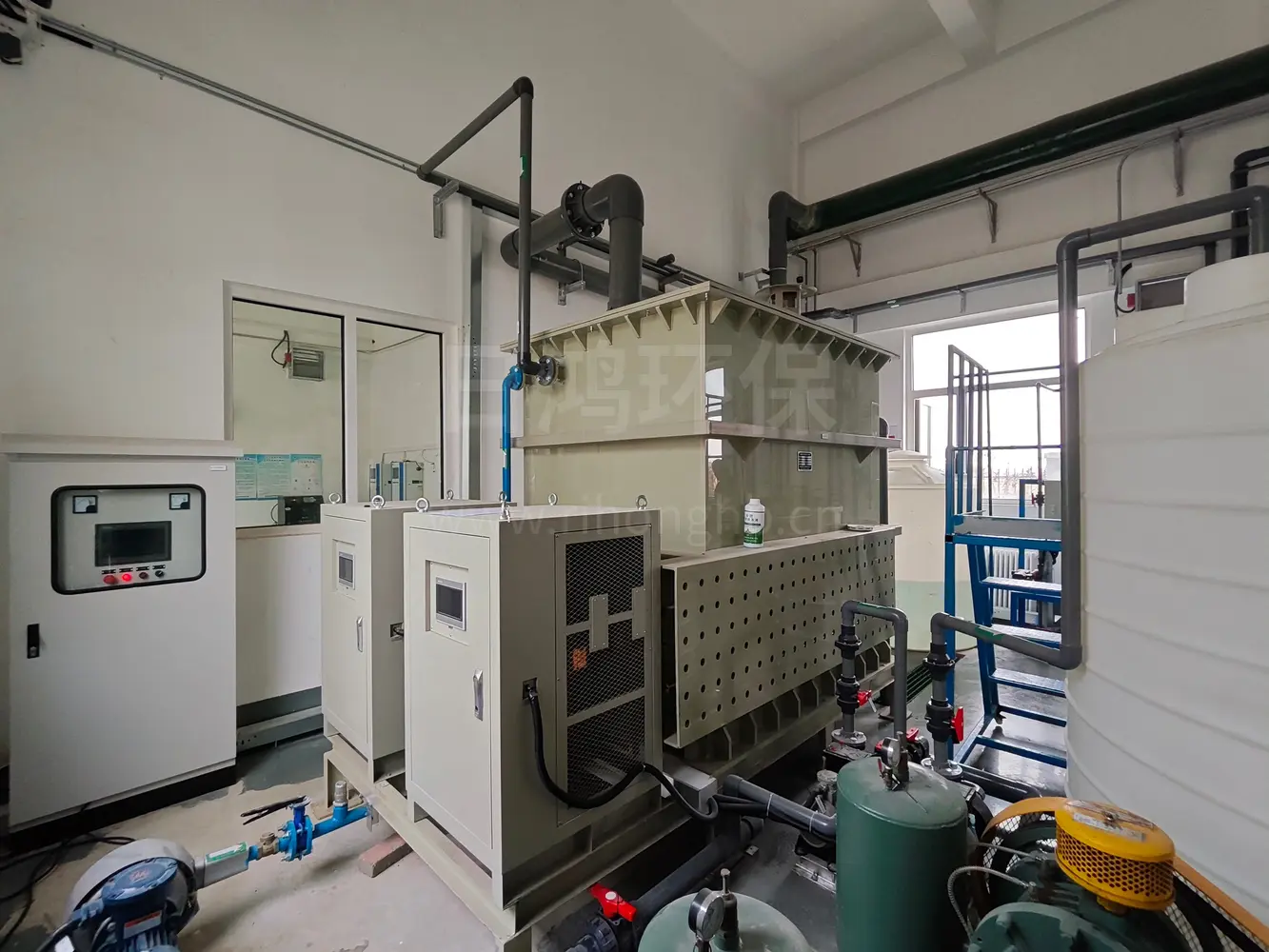
The high-efficiency electrocatalytic equipment uses catalytically active DSA electrodes to simultaneously remove COD and ammonia nitrogen from wastewater through electrocatalytic oxidation within a specific electrochemical reactor, making it suitable for the treatment of high-concentration refractory organic wastewater.
Introduction to the High-Efficiency Self-Controlled Electrocatalytic Reactor:
The high-efficiency self-controlled electrocatalytic reactor accelerates the reaction of charges on the electrocatalytic medium through catalytically active DSA electrodes within a specific electrochemical reactor. Electrocatalytic technology can simultaneously and efficiently remove COD and ammonia nitrogen from wastewater, breaking through the technical barrier that oxidation technology cannot simultaneously remove COD and ammonia nitrogen in wastewater treatment. It degrades organic matter through direct anodic degradation or through oxidants such as hydroxyl radicals (·OH), ozone, and hypochlorous acid generated by anodic reactions, as well as a series of chemical reactions, electrochemical processes, or physical processes induced thereby, achieving the purpose of pollutant degradation and transformation. This degradation pathway makes organic matter decomposition more thorough, less likely to produce toxic intermediates, while the reactor equipment is relatively simple, occupies a small footprint, has low operation and maintenance costs, can effectively avoid secondary pollution, and offers a high degree of reaction controllability, facilitating industrial automation.
Reaction Mechanism:
The main process for organic wastewater treatment adopts the electrocatalytic oxidation method, which involves electrocatalytic degradation on the electrode surface. The electrodes can directly generate extremely strong oxidizing hydroxyl radicals [·OH] that are non-selective toward organic and inorganic substances to oxidize pollutants in water, causing pollutants to be completely mineralized, which is known as

the electrochemical combustion process; if the aqueous solution contains electrocatalytic media such as Cl-, SO42- using: sodium sulfate, chlorine gas, hypochlorite, and chlorate, etc. The generated peroxide H2O2, etc., catalytically oxidizes pollutants in water, and this process is called the electrochemical conversion process, whereby electro-oxidation effectively removes COD from wastewater. Some of the main reactions in the electrocatalytic process are as follows:
Anodic reaction: OH-→1/2O2 + H2O + 2e-
Cathodic reaction: O2 + H2O + 2e-→ HO2- + OH-
Overall reaction: 1/2O2 + OH- → HO2-
The hydroxyl radicals [·OH] generated by electrocatalysis cause secondary reactions in wastewater, causing pollutants to degrade or directly decompose into CO2, or convert into other simple compounds. The electrocatalytic process follows Faraday's law, i.e., the amount of substance deposited on the electrode is proportional to the current intensity passing through the solution and the duration of electrification. Similarly, the removal of organic pollutants from wastewater also conforms to Faraday's law. In the process of removing organic pollutants from wastewater, it is not necessary to completely oxidize them into final products, i.e., CO2 and H2O; it is only necessary to break the chains of organic pollutant molecules, tearing them into charged organic 'fragments,' and remove organic pollutants through electrocatalytic adsorption, flocculation, and sedimentation.
Technical Advantages:
1. High environmental compatibility: Electrochemical water treatment technology uses clean, effective electrons and does not require additional oxidants, reductants, flocculants, or other chemical agents during the electrocatalytic process, making it a 'green' treatment technology that is essentially non-polluting to the environment. Due to the extremely high potential gradient in the interfacial electric field, the electrode acts as a catalyst for heterogeneous reactions, thereby reducing environmental pollution that could be caused by adding catalysts. During the electrocatalytic process, the •OH radicals generated can directly react with organic pollutants in wastewater, degrading them into carbon dioxide, water, and simple organic compounds, with no or minimal secondary pollution. At the same time, the electrochemical process has high selectivity, which can prevent the formation of by-products and reduce the occurrence of pollutants.
2. Multifunctionality: The electrochemical process has functions such as direct and indirect oxidation and reduction, phase separation, concentration and dilution, and biological inactivation, with high energy efficiency. The electrochemical process can generally be carried out at ambient temperature and pressure.
3. Economical and applicable: Electrocatalytic equipment and its operation are generally relatively simple, with low costs and a small footprint, typically in modular combinations.
4. Extremely strong oxidizing capability: A. Hydroxyl radicals (OH) have extremely strong oxidizing power, second only to fluorine (F2), and much stronger than ozone (O3); B. The chemical reaction of OH radicals oxidizing and degrading organic matter is a chain reaction. Once the oxidation reaction occurs, as long as no inhibitor is added, the reaction will continue in a continuous cycle; C. The degradation of organic pollutant compounds is thorough (sometimes can be oxidized all the way to carbon dioxide and water) and broad-spectrum (any organic matter can be oxidized and degraded).
FAQ
How much does this equipment cost?
The price varies by treatment capacity, water quality, materials and configuration, so a custom quote is provided based on your actual conditions. We offer free water testing and solution design, with a detailed quote within 1 working day after requirements are confirmed.
What treatment capacity is available? Can it be customized?
Capacity is fully customizable, ranging from tens to thousands of tons per day (e.g. 0.5–30 m³/h), with non-standard design support matched precisely to your inlet/outlet requirements.
How long does delivery take?
Standard equipment typically takes about 2–4 weeks to produce; custom projects depend on scale and process. The delivery date is confirmed at contract signing, with design, manufacturing and shipping progressing on schedule.
Is installation and commissioning included?
Yes. We provide installation, system commissioning, operator training and environmental acceptance assistance, as well as long-term managed operation services on request.
What about after-sales and warranty?
We provide a warranty period and a 24/7 technical hotline, with free repair for non-human faults during the warranty period, plus spare parts supply and regular inspection services.
Still worried about wastewater treatment?
Free Testing · Free Custom Solutions · Engineering Construction · Equipment R&D · Managed Operation
Contact Us Now →Related Products
Electrocoagulation DAF Unit
Faced with complex wastewater from electroplating, printing and dyeing, petrochemical, landfill leachate and other industries—characterized by high salinity, high turbidity, oil content and poor biodegradability—traditional chemical coagulation often falls into the dilemma of high chemical consumption, large sludge volume and unstable compliance. Wushi Environmental officially launches the Electrocoagulation-Dissolved Air Flotation Integrated Unit (EC-DAF), which integrates electrolytic coagulation, electroflotation and free radical oxidation into a single unit. With no or only a small amount of chemical dosing, it simultaneously achieves coagulation, flotation separation and partial oxidative degradation, providing a cleaner and more compact technical route for the pretreatment and advanced treatment of difficult wastewater.
Boron-Doped Diamond (BDD) Electrode
Facing complex wastewater from pharmaceuticals, pesticides, dyes, and landfill leachate—characterized by "high toxicity, high salinity, and poor biodegradability"—traditional biological treatment and conventional Fenton often struggle with slow degradation, secondary sludge production, and high costs. Boron-Doped Diamond (BDD) electrodes, with their extremely wide electrochemical potential window and ultra-high oxygen evolution overpotential, in-situ enrich strong oxidizing species such as hydroxyl radicals, active chlorine, persulfate, and even ozone on the anode surface, directly "mineralizing" organic matter into carbon dioxide and water—making them the core electrode consumable for electrocatalytic oxidation (ECO) equipment to achieve deep purification.
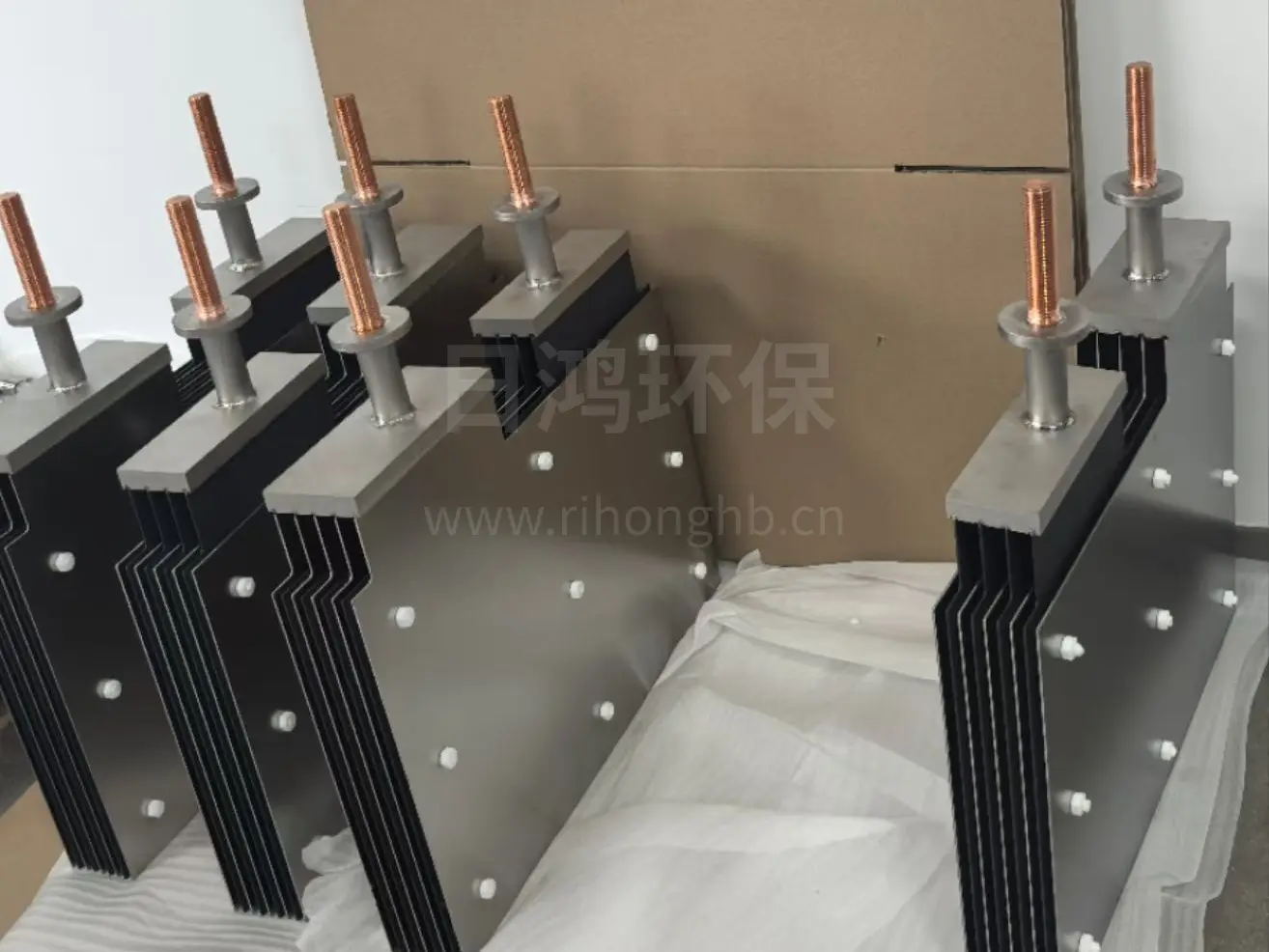
Titanium Anodes for Wastewater Treatment
The performance of electrochemical water treatment processes such as electrocatalytic oxidation, electrolytic chlorine disinfection, and electro-Fenton fundamentally depends on the electrode. Traditional soluble anodes (such as aluminum and iron) are consumed quickly, require frequent electrode replacement, and introduce additional metal ions into the water. This product is a Dimensionally Stable Anode (DSA) made with industrial pure titanium as the substrate and a noble metal oxide active layer coated on the surface. It is insoluble, long-lasting, and has tunable catalytic properties, making it the "heart" component for long-term stable operation of electrochemical wastewater treatment equipment.