
Boron-Doped Diamond (BDD) Electrode
Facing complex wastewater from pharmaceuticals, pesticides, dyes, and landfill leachate—characterized by "high toxicity, high salinity, and poor biodegradability"—traditional biological treatment and conventional Fenton often struggle with slow degradation, secondary sludge production, and high costs. Boron-Doped Diamond (BDD) electrodes, with their extremely wide electrochemical potential window and ultra-high oxygen evolution overpotential, in-situ enrich strong oxidizing species such as hydroxyl radicals, active chlorine, persulfate, and even ozone on the anode surface, directly "mineralizing" organic matter into carbon dioxide and water—making them the core electrode consumable for electrocatalytic oxidation (ECO) equipment to achieve deep purification.
I. Product Positioning
Boron-Doped Diamond (BDD) electrodes are a type of dimensionally stable insoluble anode made by growing a micron-thick boron-doped diamond film on conductive substrates such as tantalum (Ta), niobium (Nb), titanium (Ti), or silicon (Si) via chemical vapor deposition (CVD). Boron atoms substitute some carbon atoms in the diamond lattice, imparting p-type conductivity to intrinsically insulating diamond; the diamond film itself combines three key characteristics—"wide potential window + chemical inertness + extremely low background current"—making it one of the most powerful anode materials for mineralization in the field of electrochemical advanced oxidation. BDD electrodes are supplied as the core component of electrocatalytic oxidation (ECO) reactors and can be returned to the factory for recoating and regeneration at the end of their service life.
II. Working Principle (Brief)
CVD film deposition: A micron-thick diamond film is grown on a clean substrate (Ta/Nb/Ti/Si) surface using hot filament or microwave CVD, then ground and cleaned for use.
Boron doping for conductivity: A boron source is introduced during deposition, converting the diamond film from insulating to p-type conductive while maintaining diamond's wide window and inert intrinsic properties.
Energization: As the anode in an electrolytic cell, an anodic potential higher than that of conventional electrodes is applied, driving the surface into a strong oxidation working zone without premature oxygen or chlorine evolution.
Enrichment of strong active species: The ultra-high oxygen evolution overpotential causes continuous accumulation of ·OH on the anode surface (along with active chlorine and persulfate depending on the medium, and even in-situ ozone generation in acidic electrolyte-containing conditions).
Dual oxidation mineralization: Organic matter undergoes both "direct oxidation" on the electrode surface (direct electron transfer bond cleavage) and "indirect oxidation" (attack by active species), leading to gradual mineralization and degradation.
Stable service / recoatable: The diamond film is extremely chemically inert, resistant to adsorption fouling and scaling; after long-term operation, the depleted coating can be returned to the factory for CVD recoating and regeneration.
Process schematic: Conductive substrate → CVD growth of boron-doped diamond film → Cell loading and energization → Enrichment of active species in anode strong oxidation zone → Direct + indirect oxidation mineralization → Compliant effluent
The core mechanism lies in BDD's "wide potential window + high oxygen evolution overpotential": conventional electrodes evolve oxygen first at high potentials (consuming current and reducing efficiency), whereas BDD can push the anode potential into a very wide oxidation region where "no oxygen evolution" occurs, concentrating energy on generating active species and bond-cleavage mineralization—this is the root of its mineralization capability far exceeding ordinary electrodes.
III. Core Advantages
① Extremely strong mineralization capability Extremely wide potential window (approximately 3.0–4.0 V) and ultra-high oxygen evolution overpotential drive organic matter toward complete mineralization into CO₂ and water, rather than mere bond cleavage and transformation.
② Chemically inert and anti-fouling The diamond surface is hydrophobic with extremely low adsorption, resistant to organic or salt scale fouling and coking, offering long-term operational stability superior to ordinary metal oxide coatings.
③ No metal ion dissolution Unlike soluble anodes that corrode during operation or certain coatings that release metals, it causes no secondary metal contamination in the effluent, with constant electrode spacing.
④ Synergistic multi-active species Depending on the medium, it can generate ·OH, active chlorine, and persulfate in situ, and even ozone in acidic electrolytes, offering flexible and highly adaptable oxidation pathways.
⑤ Long life and recoatable The diamond film is corrosion- and wear-resistant with a long service cycle; after coating depletion, it can be returned to the factory for CVD recoating and regeneration, reducing long-term consumable costs.
⑥ High-salinity wastewater friendly It maintains high current efficiency and mineralization capability in high-conductivity wastewater, making it a powerful choice for advanced treatment of "high-salinity + refractory" wastewater.
IV. Main Technical Parameters (Reference Ranges)
Item | Parameter Range / Description | Remarks |
|---|---|---|
Conductive substrate | Ta / Nb / Ti / Si | For high-corrosion, strong oxidation conditions, Ta, Nb, or Si are preferred to avoid passivation of Ti substrate under chlorine evolution |
Diamond film thickness | 1–10 μm | CVD deposited layer; thickness affects lifespan and current carrying capacity |
Boron doping concentration | 10¹⁹–10²¹ atoms/cm³ (typically 10³–10⁴ ppm B/C) | Determines the balance between conductivity and electrochemical window |
Electrochemical potential window | Approximately 3.0–4.0 V (aqueous solution vs. SHE) | Far higher than conventional DSA electrodes; the wide window is the basis for strong mineralization |
Oxygen evolution overpotential | Approximately 1.7–2.3 V (relative to standard oxygen evolution potential) | High overpotential suppresses side reactions and improves current efficiency |
Working current density | 50–500 A/m² (depending on conditions and design) | Can be higher in high-salinity systems; requires mass transfer design coordination |
Working temperature | Ambient to ≤80 ℃ | Long-term high temperature requires evaluation of film and seal resistance |
pH adaptation range | Acidic to neutral (approximately pH 1–9) | Higher ozone/active species yield under acidic conditions |
* The above are typical reference ranges; actual substrate selection, film thickness, doping level, and operating window should be based on water sample bench tests and formal design calculations.
V. Typical Application Scenarios
Scenario / Industry | Adaptation Description / Main Removal Targets |
|---|---|
Pharmaceutical / API wastewater | Degrades antibiotics, intermediates, and other refractory organics; deeply reduces COD and toxicity |
Pesticide / fine chemical wastewater | Breaks down toxic organophosphorus and heterocyclic refractory components; improves biodegradability |
Landfill leachate (especially RO concentrate) | Deep mineralization of high-salinity, high-toxicity concentrate; connects to membrane concentration backend |
Dye / printing and dyeing wastewater | Decolorizes and mineralizes chromophores and auxiliaries; solves dual challenges of color and COD |
Electroplating / PCB wastewater | Destroys cyanide, complexed heavy metals, and refractory additives; assists detoxification |
High-salinity industrial wastewater | Maintains high current efficiency in high-conductivity systems; suitable for "high-salinity + refractory" |
Electrocatalytic oxidation (ECO) complete system integration | Serves as the core anode of ECO reactors; can also be used as electro-Fenton anode |
VI. Applicable Boundaries and Selection Recommendations
BDD electrodes have top-tier mineralization capability, but their manufacturing relies on CVD processes and requires precious substrates such as Ta/Nb/Si, making unit cost significantly higher than conventional DSA titanium anodes. They are more suitable for benchmark conditions requiring "high toxicity, high salinity, refractory, and deep mineralization," rather than large-volume conventional pretreatment. For selection, it is recommended to: first conduct bench tests with actual water samples to confirm mineralization efficiency and energy consumption before scaling up; for strong oxidation, chlorine-containing, or high-temperature conditions, prefer Ta, Nb, or Si substrates to avoid titanium substrate passivation; focus on mass transfer and electrode spacing design to maintain high current efficiency. Relationship with "titanium anodes for wastewater treatment (DSA)"—BDD and DSA are both insoluble anodes that can be recoated and regenerated, but BDD achieves wide-window strong mineralization with a diamond film at high cost, while DSA achieves mature low-cost chlorine/oxygen evolution with precious metal oxide coatings; the two are selected and matched based on the trade-off between "mineralization intensity vs. cost."
Refractory, high salinity? Let BDD electrodes "electrify" it first
Rihong Environmental can provide BDD electrode selection, ECO complete system integration, and water sample bench test solutions. Welcome to call or leave a message for customized design.
Contact Us Now →Related Products
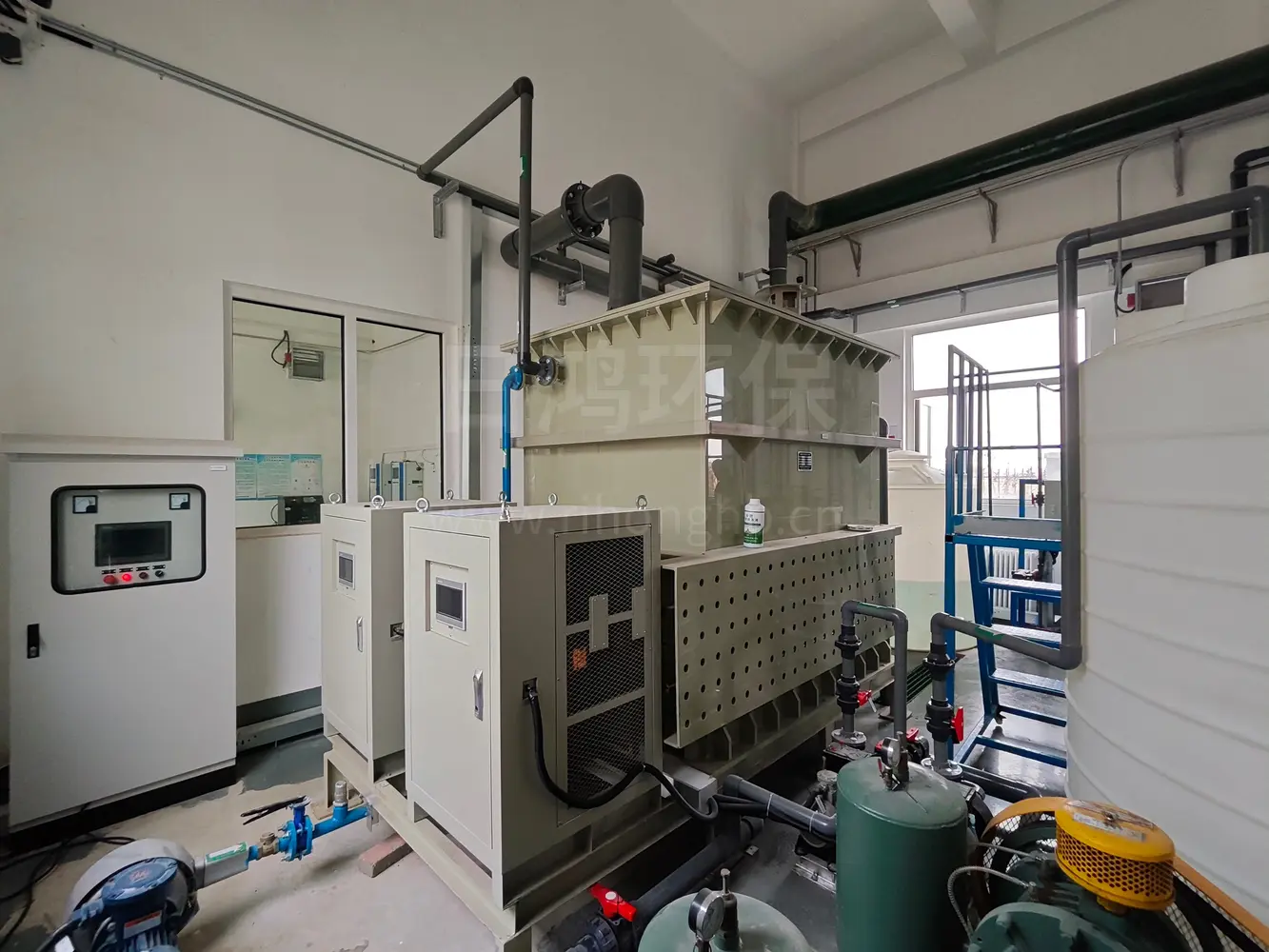
Electrocoagulation DAF Unit
Faced with complex wastewater from electroplating, printing and dyeing, petrochemical, landfill leachate and other industries—characterized by high salinity, high turbidity, oil content and poor biodegradability—traditional chemical coagulation often falls into the dilemma of high chemical consumption, large sludge volume and unstable compliance. Wushi Environmental officially launches the Electrocoagulation-Dissolved Air Flotation Integrated Unit (EC-DAF), which integrates electrolytic coagulation, electroflotation and free radical oxidation into a single unit. With no or only a small amount of chemical dosing, it simultaneously achieves coagulation, flotation separation and partial oxidative degradation, providing a cleaner and more compact technical route for the pretreatment and advanced treatment of difficult wastewater.
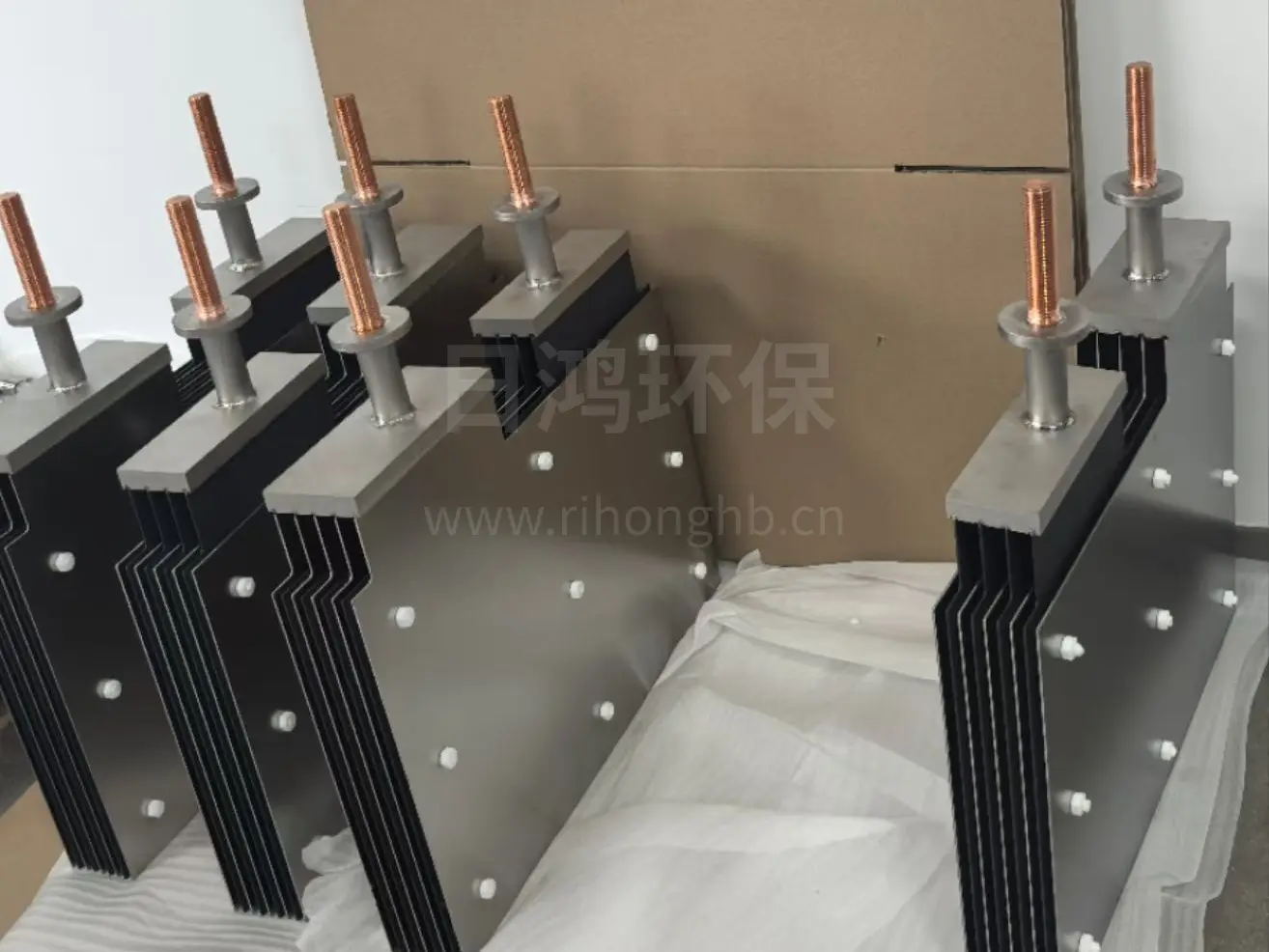
Titanium Anodes for Wastewater Treatment
The performance of electrochemical water treatment processes such as electrocatalytic oxidation, electrolytic chlorine disinfection, and electro-Fenton fundamentally depends on the electrode. Traditional soluble anodes (such as aluminum and iron) are consumed quickly, require frequent electrode replacement, and introduce additional metal ions into the water. This product is a Dimensionally Stable Anode (DSA) made with industrial pure titanium as the substrate and a noble metal oxide active layer coated on the surface. It is insoluble, long-lasting, and has tunable catalytic properties, making it the "heart" component for long-term stable operation of electrochemical wastewater treatment equipment.