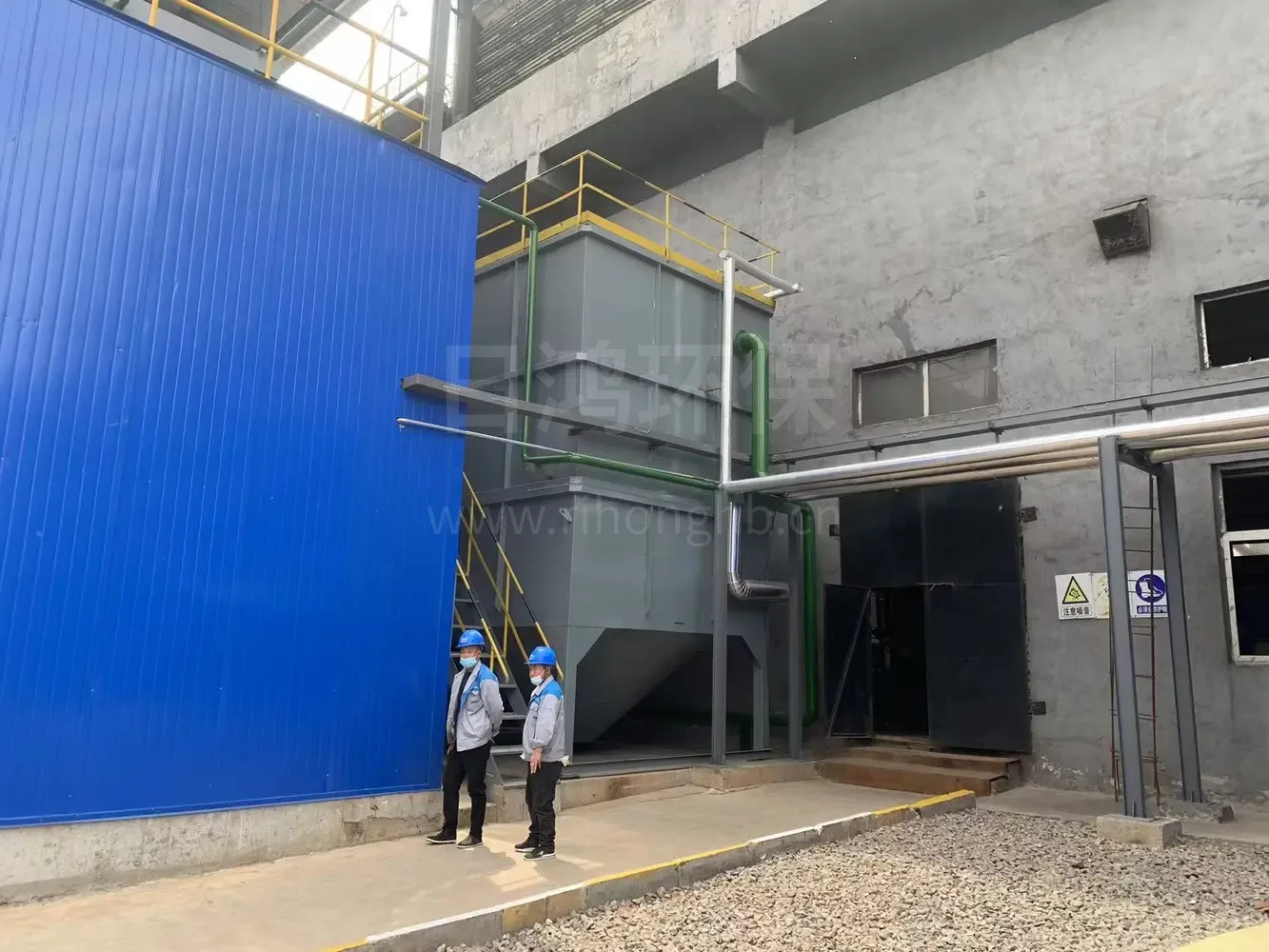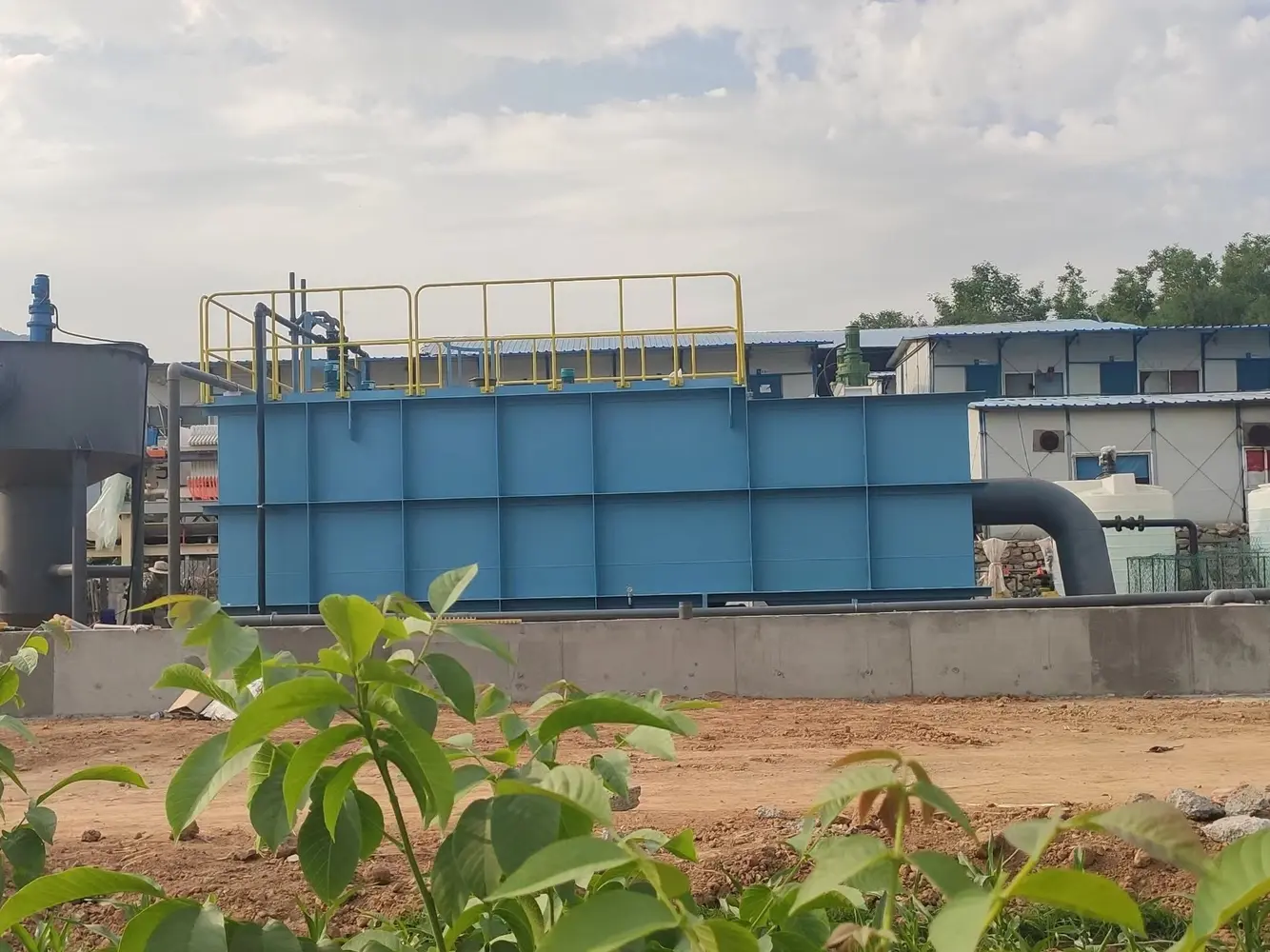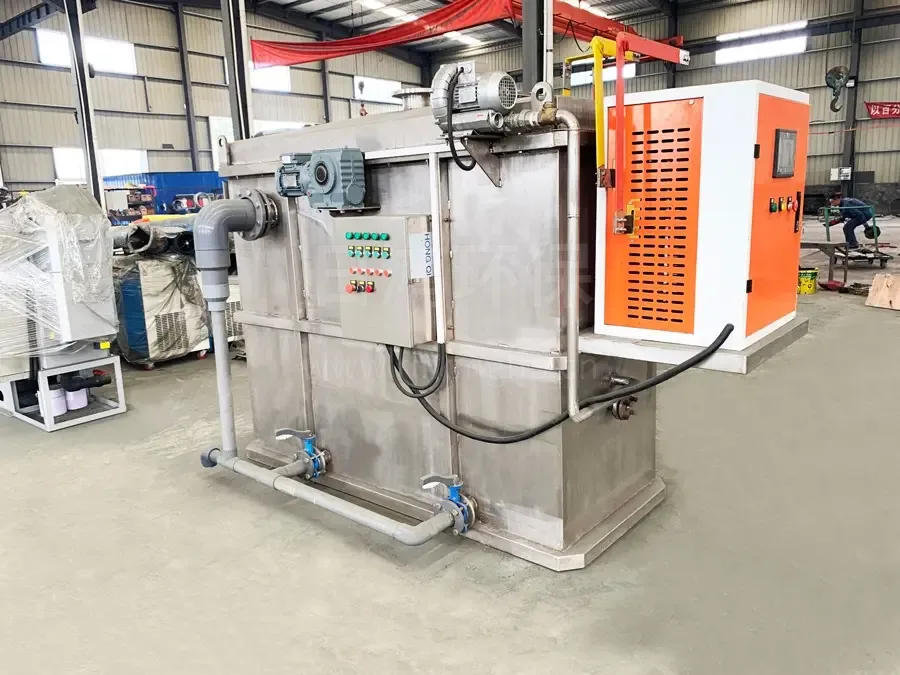
New Generation Electrocoagulation-DAF Integrated Unit Officially Launched: A "Electricity-for-Chemicals" Solution for Refractory Wastewater Treatment
Facing complex wastewater with "high salinity, high turbidity, oil content, and poor biodegradability" from industries such as electroplating, printing and dyeing, petrochemicals, and landfill leachate, traditional chemical coagulation often falls into the dilemma of "high chemical consumption, large sludge volume, and unstable compliance." Wushi Environmental Protection has officially launched the Electrocoagulation-DAF Integrated Unit (EC-DAF), which integrates electrolytic coagulation, electroflotation, and free radical oxidation into a single unit. With no or only a small amount of chemical dosing, it can simultaneously achieve coagulation, flotation separation, and partial oxidative degradation, providing a cleaner and more compact technical route for the pretreatment and advanced treatment of highly challenging wastewater.
I. Product Positioning
The Electrocoagulation-DAF Integrated Unit is a deeply coupled device combining electrocoagulation (EC) and dissolved air/electroflotation (DAF). It uses a sacrificial metal (iron/aluminum) anode to dissolve multivalent metal ions under direct current as an "in-situ coagulant," while hydrogen gas is evolved at the cathode to form micron-sized microbubbles. The buoyancy of the bubbles carries flocs, oil droplets, and colloidal particles to the water surface to form scum that is scraped off, while the lower clear water is discharged to meet standards. The unit adopts a modular integrated design, combining reaction, separation, scum collection, and electrical control in one, and can be installed above ground and put into use immediately upon connection.
II. Working Principle (Brief)
Raw water inlet Electrocoagulation reaction chamber Anode dissolves Fe/Al ions Cathode evolves H₂ microbubbles Flotation separation chamber Flocs/oil droplets float up Clear water sinks and is discharged Clear water outlet Scum scraping
Process schematic: Raw water → Electrocoagulation reaction chamber (in-situ coagulation + hydrogen microbubbles) → Flotation separation chamber (scum floats up / clear water sinks) → Compliant effluent
The entire process is completed continuously within the same reactor: the metal hydroxide flocs generated by electrolysis have stronger entrapment and adsorption capacity than chemical coagulation, while the hydrogen microbubbles continuously evolved at the cathode (typically tens of microns in size) provide ample buoyancy carriers for the flocs; some organic matter is also electrochemically oxidized and indirectly oxidized by free radicals (·OH, etc.) near the anode, achieving a triple synergy of "coagulation + flotation + oxidation."
III. Core Advantages
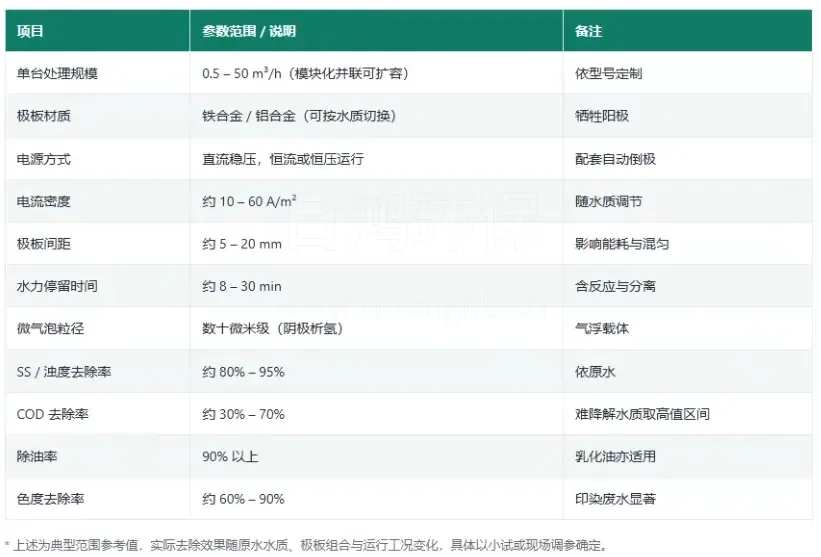
① Electricity replaces chemicals, reducing sludge at the source In-situ coagulant generation requires no or only a small amount of PAC/PAM dosing, and sludge production can be reduced by about 30%–50% compared with traditional coagulation.
② Dual action of bubbles + oxidation Hydrogen microbubble flotation and free radical oxidation work synergistically to simultaneously remove colloids, emulsified oil, and color.
③ Compact integrated design, ready to use upon connection Modular steel tank, small footprint, above-ground installation, suitable for land-constrained or retrofit projects.
④ Intelligent control, anti-passivation Constant current/constant voltage mode + automatic polarity reversal slows electrode plate passivation, ensuring stable operation and simple maintenance.
⑤ Wide water quality adaptability Good adaptability to high-salinity, high-turbidity, oil-containing, and heavy-metal-containing wastewater, with resistance to shock loads.
⑥ Clean and safe Does not introduce large amounts of external chemicals, resulting in less secondary pollution and more controllable hazardous waste characteristics.
IV. Main Technical Parameters (Reference Range)
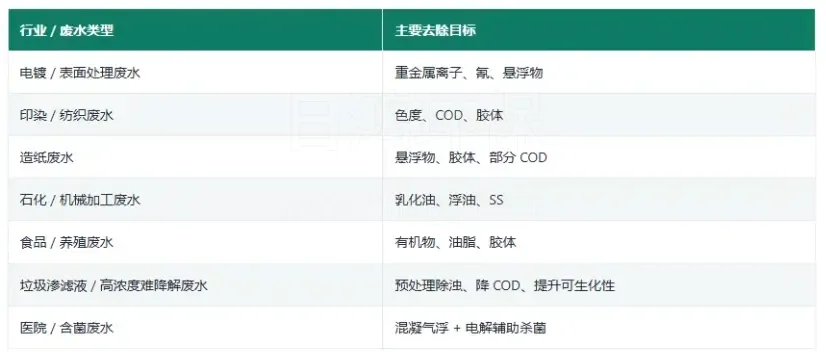
V. Typical Application Scenarios
VI. Selection Recommendations
The Electrocoagulation-DAF Integrated Unit is more suitable for pretreatment for turbidity and oil removal, advanced decolorization, and pre-destabilization of refractory wastewater. For very low-concentration tailwater or scenarios requiring extremely high removal rates, it is recommended to combine it with biochemical, Fenton, ozone, and other processes to form a cascade treatment. In water with low conductivity, electrolytes can be appropriately supplemented to improve electrolysis efficiency; for high-hardness water, attention should be paid to electrode plate scaling and polarity reversal strategies.
Still worried about wastewater treatment?
Free Testing · Free Custom Solutions · Engineering Construction · Equipment R&D · Managed Operation
Contact Us Now →