High-Density Sedimentation Tank Officially Launched: High-Rate Clarification and Sludge Thickening in One Step
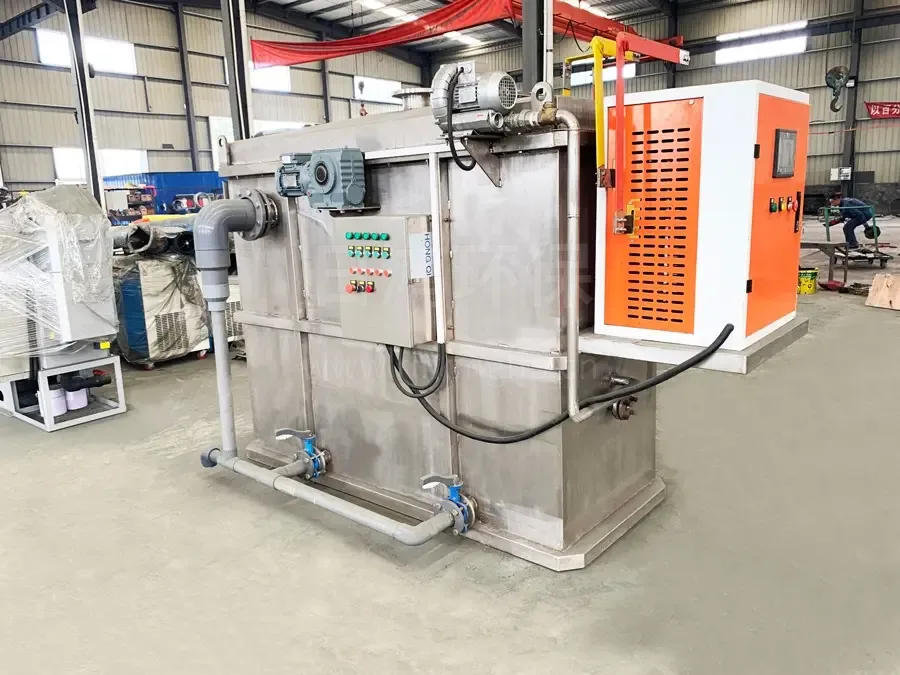
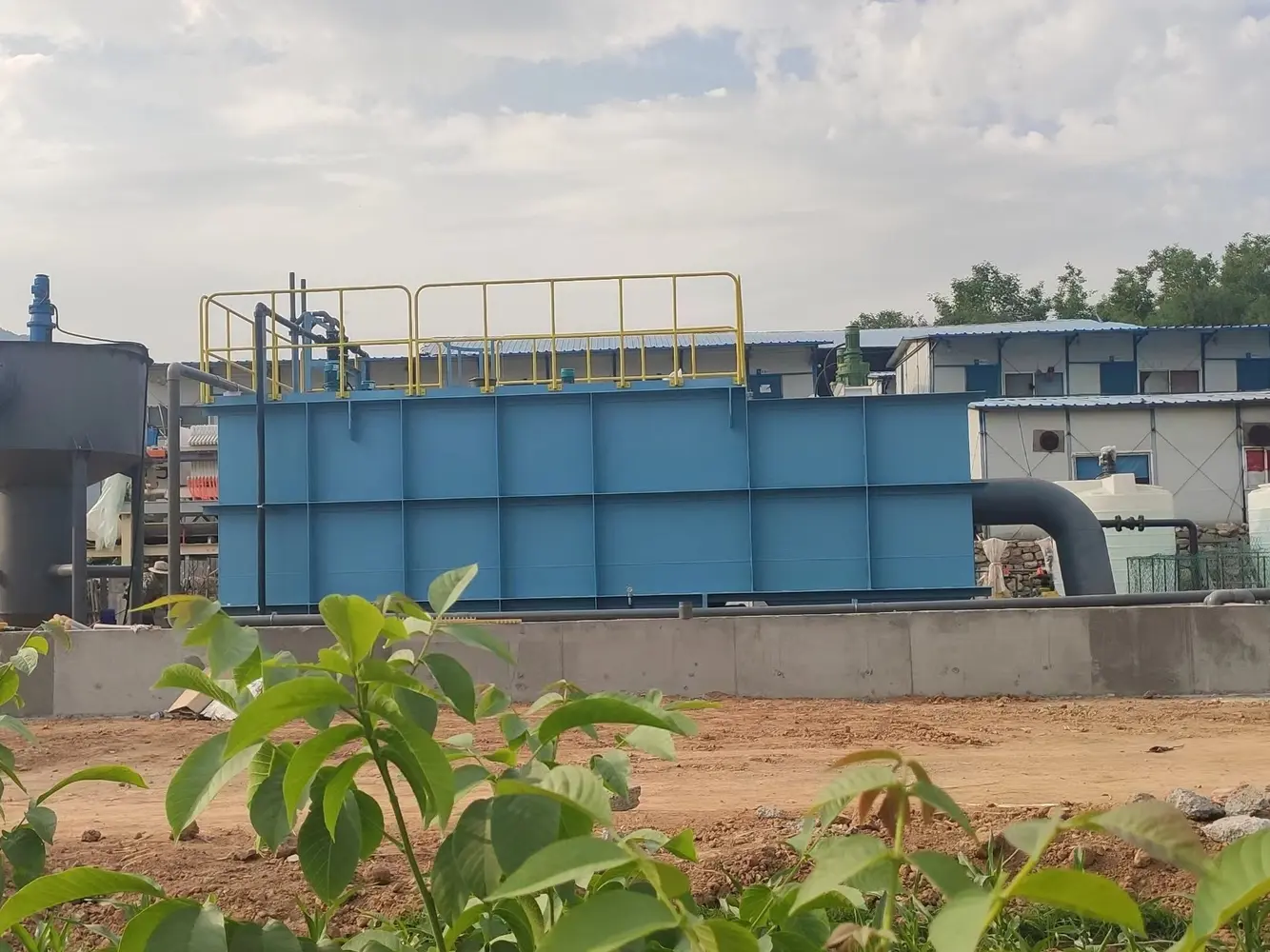
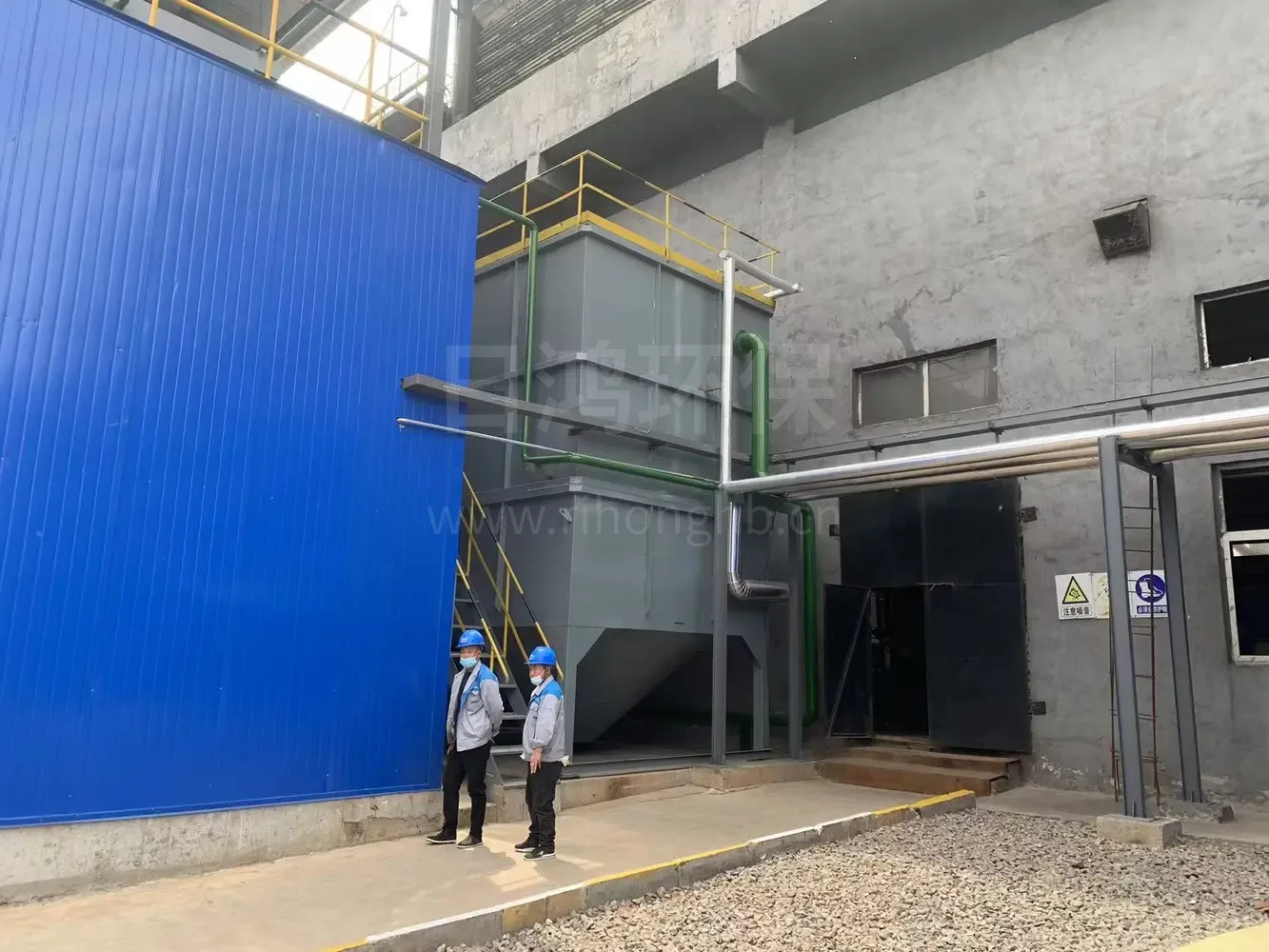
In scenarios such as water supply purification, advanced wastewater treatment, and hardness and fluoride removal from industrial wastewater, traditional sedimentation tanks often face bottlenecks of "large footprint, low surface loading rate, poor effluent quality under low-temperature and low-turbidity conditions, and high moisture content in discharged sludge." Wushi Environmental has launched the High-Density Sedimentation Tank (High Rate Clarifier / Densadeg type), which integrates rapid mixing, mechanical flocculation, inclined tube (plate) separation, and external sludge circulation thickening into a single tank. By virtue of the "dense floc core" formed by high-concentration sludge return, it operates stably at surface loading rates far higher than conventional sedimentation, producing clear effluent with minimal sludge discharge. It is an ideal choice for upgrading and new construction projects.
I. Product Positioning
The high-density sedimentation tank is a high-efficiency clarification and sedimentation equipment loaded with inclined tubes (plates), whose essential feature is "external sludge circulation + high-concentration flocs." Raw water and coagulant are instantly and uniformly mixed in the rapid mixing zone. After entering the flocculation zone, under the combined action of slow stirring and returned high-concentration sludge, large and dense flocs are formed. Subsequently, the water flow enters the inclined tube (plate) separation zone, achieving high-rate clarification by virtue of the shallow pool principle. The bottom sludge is gravity-thickened in the thickening zone, part of which returns to the flocculation zone as "seed crystals," while the rest is discharged for dewatering. The entire tank structure is compact, often adopting integrated or combined steel-reinforced concrete/steel structure, with a significantly reduced footprint compared to traditional processes.
II. Working Principle (Brief)
Raw water + chemicals rapid mixing flocculation zone slow stirring + sludge return inclined tube separation zone shallow pool high-rate clarification clear water effluent sludge thickening zone gravity thickening sludge discharge sludge return
Process schematic: Raw water + chemicals → rapid mixing → flocculation zone (sludge return) → inclined tube separation zone (clear water overflow) → bottom thickening → partial return / partial discharge
The core lies in the high-concentration "floc seed crystals" formed by sludge return: the returned sludge provides a large number of already-formed dense particles, and newly generated micro-flocs continue to grow on their surfaces. The flocs are large in size, fast in settling, and strong in impact resistance. Combined with the shallow pool effect of inclined tubes (plates), the tank maintains excellent effluent quality even at very high surface loading rates.
III. Core Advantages
① High surface loading rate, small footprint Adopting inclined tube (plate) separation, the surface loading rate is far higher than traditional sedimentation tanks, and the footprint is significantly reduced for the same treatment capacity.
② Sludge return, dense flocs High-concentration sludge return serves as seed crystals, producing large flocs, fast settling, and impact resistance, operating stably even under low-temperature and low-turbidity conditions.
③ Excellent effluent quality Good removal of SS, TP, and some heavy metals and hardness, often used as an advanced treatment unit for upgrading.
④ Bottom thickening, minimal sludge discharge Gravity thickening in the thickening zone results in low moisture content in discharged sludge, reducing subsequent dewatering load and disposal costs.
⑤ Zoned chemical dosing, chemical savings Segmented dosing in mixing and flocculation zones allows precise and controllable dosage, saving more chemicals than "all-in-one" dosing.
⑥ Modular, easy to retrofit Can be steel-reinforced concrete or integrated steel structure, easily arranged for both new construction and upgrading of existing tanks.
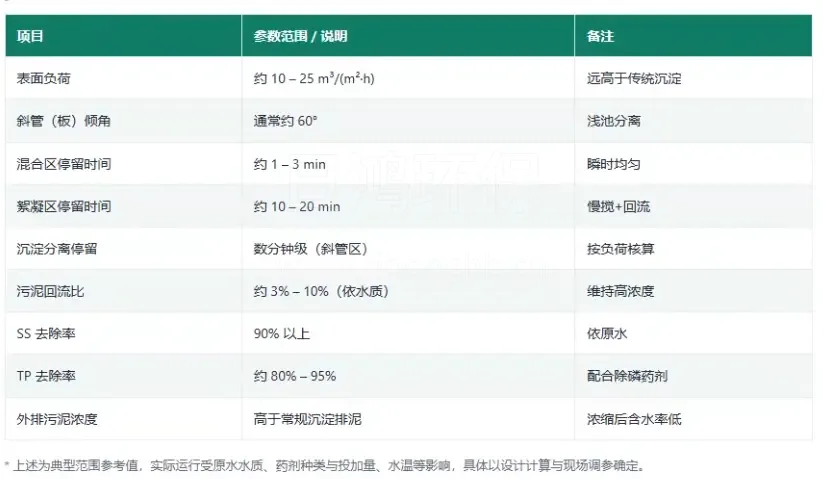
IV. Main Technical Parameters (Reference Range)
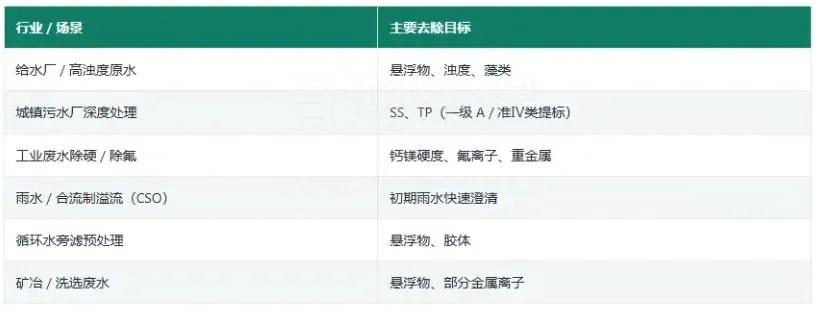
V. Typical Application Scenarios
VI. Selection Recommendations
The high-density sedimentation tank excels in high-rate clarification and chemical impurity removal (phosphorus removal, hardness removal, fluoride removal, heavy metal precipitation). For wastewater dominated by soluble organic matter (COD), its removal efficiency alone is limited, and it should be combined with biochemical, filtration, advanced oxidation, and other units. The type of chemicals and return ratio need to be determined through small-scale water quality tests; during low-temperature and low-turbidity or high-algae periods, attention should be paid to the uniformity of water distribution in the inclined tube zone and the smoothness of sludge discharge.
Still worried about wastewater treatment?
Free Testing · Free Custom Solutions · Engineering Construction · Equipment R&D · Managed Operation
Contact Us Now →