
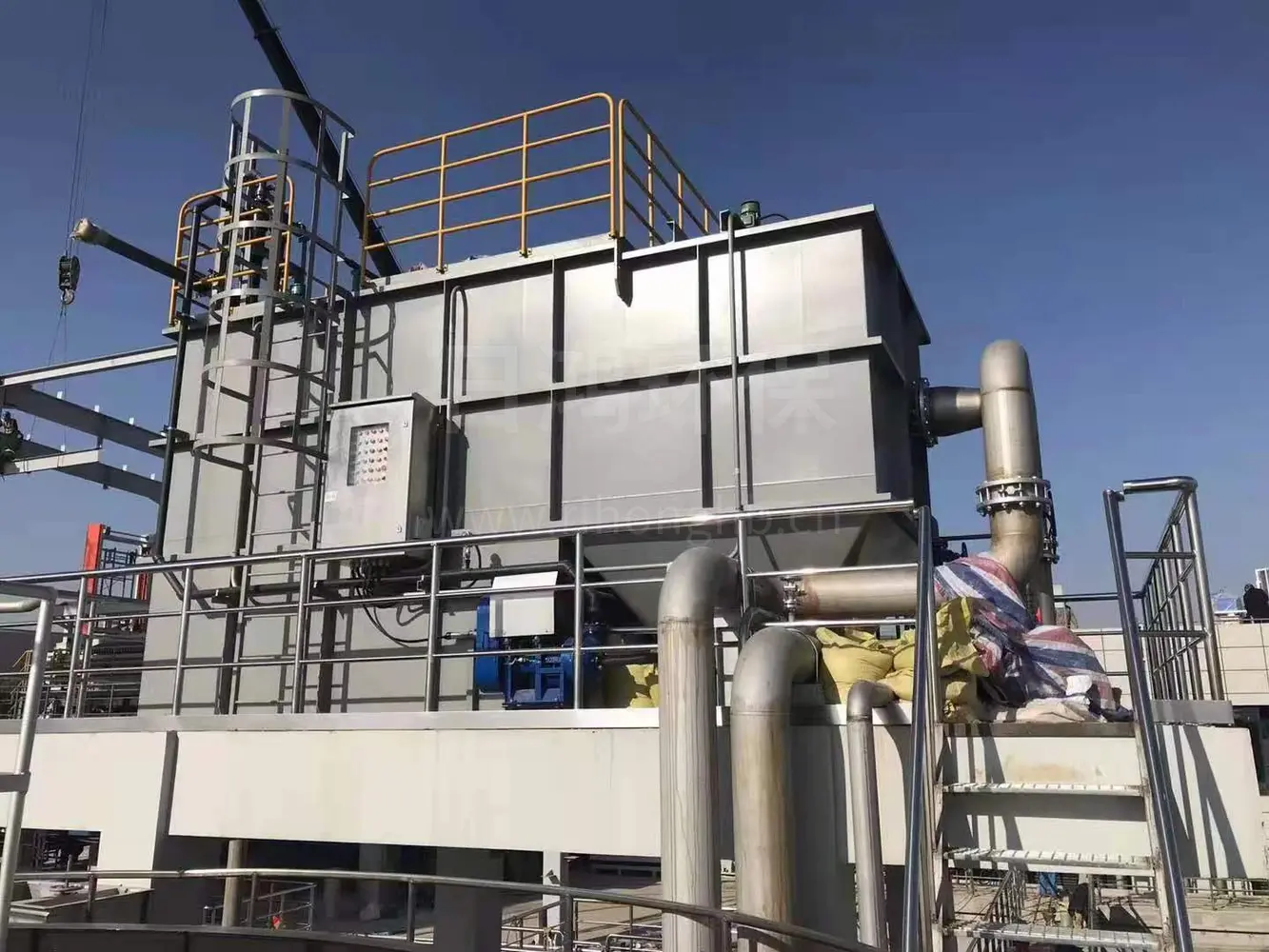
Microsand and Carbon Sedimentation Tank
Faced with the challenge of "dissolved taste and odor, color, micropollutants, and refractory COD" in drinking water and reuse water that cannot be removed by conventional coagulation and sedimentation, and with limited plant footprint, the Microsand and Carbon Sedimentation Tank couples microsand-loaded high-rate sedimentation with powdered activated carbon (PAC) adsorption in a single unit. It efficiently removes turbidity while adsorbing dissolved pollutants, with microsand recycled for reuse, requiring only 1/5–1/10 of the footprint of traditional processes.
I. Product Positioning
The Microsand and Carbon Sedimentation Tank is an advanced sedimentation equipment that integrates microsand-loaded high-efficiency clarification with powdered activated carbon adsorption (typically Actiflo Carb type). It simultaneously doses powdered activated carbon (PAC) on the basis of microsand sedimentation to form "activated carbon–microsand–floc" composite heavy particles: microsand acts as dense crystal nuclei to accelerate floc settling velocity, while activated carbon adsorbs dissolved organic matter, taste and odor compounds, color, and trace pollutants in water. The bottom concentrated sludge is separated from microsand and activated carbon via a hydrocyclone for cleaning and recycling, with only a small amount of sludge enriched with saturated carbon discharged. It is widely used for advanced drinking water purification, wastewater treatment plant upgrading, and emergency pollution response.
II. Working Principle (Brief)
Chemical dosing and mixing: Raw water enters the rapid mixing chamber, where coagulants, coagulant aids (PAM), recycled microsand, and powdered activated carbon (PAC) are dosed. PAC rapidly adsorbs dissolved pollutants, and microsand serves as dense floc nuclei.
Flocculation and granulation: Under slow stirring in the flocculation chamber, pollutants, activated carbon, and microsand combine to form heavy, dense flocs with microsand + activated carbon as the core.
High-rate separation: Water flows into the inclined tube/plate sedimentation zone. Due to high density and fast settling velocity, composite particles rapidly settle to the bottom, and clear water overflows.
Microsand and activated carbon recovery: The bottom concentrated sludge passes through a hydrocyclone, where microsand and activated carbon are cleaned and separated for recycling, reducing chemical and carrier consumption.
Residual sludge discharge: A small amount of saturated activated carbon and excess microsand is periodically discharged with the concentrated sludge for disposal.
Clear water effluent: The clarified water simultaneously achieves turbidity, odor, color, and COD reduction, meeting standards for supply or entering subsequent processes.
Process schematic: Raw water + (coagulant/PAM/microsand/PAC) → Rapid mixing → Flocculation and granulation → Inclined tube high-rate separation → Hydrocyclone recovery of microsand and carbon ⇄ Clear water effluent (residual sludge discharge)
The core lies in "using microsand as the core and activated carbon as the stomach"—microsand enhances floc density and settling velocity, achieving surface loading rates 5–10 times that of conventional sedimentation; activated carbon simultaneously adsorbs dissolved pollutants during sedimentation separation, achieving both turbidity removal and advanced purification in one tank.
III. Core Advantages
① Dual purification with microsand + activated carbon: Removes turbidity while adsorbing dissolved taste and odor, color, micropollutants, and refractory COD, which conventional sedimentation cannot achieve.
② High surface loading and small footprint: Can reach 30–60 m³/(m²·h), with a footprint only 1/5–1/10 of traditional sedimentation, suitable for capacity expansion without additional land.
③ Microsand recycling saves chemicals: Carrier and activated carbon are recovered and reused via hydrocyclone, reducing PAC and coagulant consumption, making operation economical.
④ Shock resistance and fast startup: Microsand crystal nuclei promote rapid floc formation, with strong adaptability to water quality and quantity fluctuations and quick restart recovery.
⑤ Flexible modular combination: Can be connected in series with sand filtration, ozone, carbon filtration, UF to form multi-stage advanced treatment or emergency purification lines.
⑥ Dual-use for normal and emergency: Rapid response to sudden odor, pesticides, algal blooms, oil pollution; both a routine process and an emergency tool.
IV. Main Technical Parameters (Reference Range)
Item | Parameter Range / Description | Remarks |
|---|---|---|
Surface loading | 30–60 m³/(m²·h) | Microsand-loaded high-rate clarification characteristics |
Total retention time | 15–30 min | Much shorter than conventional sedimentation |
PAC (powdered activated carbon) dosage | 5–50 mg/L | Adjusted according to pollutant concentration |
Microsand particle size | Approx. 100–150 μm | Recycled; natural loss requires replenishment |
Flocculation zone retention time | 5–15 min | Granulation formation stage |
Turbidity removal rate | ≥95% | Low effluent turbidity |
Taste and odor compound removal (geosmin/2-MIB, etc.) | 80–95% | Dominated by PAC adsorption |
Algal toxin removal rate | ≥90% | Combined with PAC adsorption |
Color / refractory COD | Significant removal (depending on water quality) | Synergistic adsorption and co-precipitation |
Main material | Anti-corrosion steel / reinforced concrete | Selected according to scale and site conditions |
* The above are typical reference ranges. Actual loading, PAC dosage, and removal efficiency are subject to water quality tests and on-site commissioning.
V. Typical Application Scenarios
Scenario / Industry | Adaptation Description / Main Removal Targets |
|---|---|
Drinking water plant odor, taste, and color removal | Lake and reservoir water, high incidence of odor and color in summer and autumn; PAC adsorbs geosmin/2-MIB, etc. |
Drinking water emergency pollution response | Short-term pollution from pesticides, algal blooms, oil; rapid carbon dosing for interception. |
Wastewater treatment plant advanced upgrading | Further reduction and stable compliance of refractory COD, color, and trace pollutants. |
Industrial wastewater decolorization | High-color wastewater from printing and dyeing, chemical industry, etc.; adsorption decolorization combined with sedimentation. |
Contaminated water source purification | In-situ or bypass purification treatment of micro-polluted surface water. |
Reuse water advanced treatment | Odor and trace pollutant control before reclaimed water reuse. |
Water supply plant capacity expansion without additional land | Replace or supplement sedimentation units with high loading within the existing plant area. |
VI. Applicable Boundaries and Selection Recommendations
The Microsand and Carbon Sedimentation Tank is suitable for scenarios with both turbidity removal needs and dissolved micropollutant removal requirements; if only suspended solids need to be removed, ordinary microsand sedimentation is sufficient and carbon addition may not be necessary. In operation, three points need attention: First, saturated activated carbon is discharged with residual sludge, requiring supporting sludge disposal and accounting for carbon consumption costs; Second, microsand undergoes natural wear and loss with sludge, requiring regular replenishment and maintaining hydrocyclone recovery efficiency; Third, PAC dosage should be determined based on water quality tests, as excessive dosing increases operating costs and sludge volume. During selection, determine loading and carbon dosage based on target pollutants, influent water quality, and footprint constraints, and if necessary, combine with ozone, sand filtration, and other units to form a multi-stage process.
Still worried about wastewater treatment?
Free Testing · Free Custom Solutions · Engineering Construction · Equipment R&D · Managed Operation
Contact Us Now →Related Products

Integrated Water Purifier
In rural areas, towns, military camps, factories and mines, surface water sources are scattered, and building traditional water treatment plants often faces challenges such as large investment, extensive land occupation, and long construction periods. Wushi Environmental Protection introduces the Integrated Water Purifier, which integrates coagulation, flocculation, sedimentation, filtration, and disinfection of a conventional water plant into a single ground-mounted unit. The effluent consistently meets the Standards for Drinking Water Quality (GB 5749), enabling scattered point sources to access safe and stable tap water.

RO Reverse Osmosis System for the Food Industry
Beverage, brewing, dairy, canning and other food production processes have extremely high requirements for the quality, stability and food safety of process water, while municipal water or groundwater often contains salinity, hardness, residual chlorine and microorganisms. Wushi Environmental has launched RO reverse osmosis equipment for the food industry, integrating pretreatment, high-pressure pumps, membrane separation and automatic control into a single skid-mounted unit. It performs physical desalination at ambient temperature without the need for large amounts of chemicals, stably producing high-purity process water to help food enterprises meet water quality standards, improve quality and reduce costs.
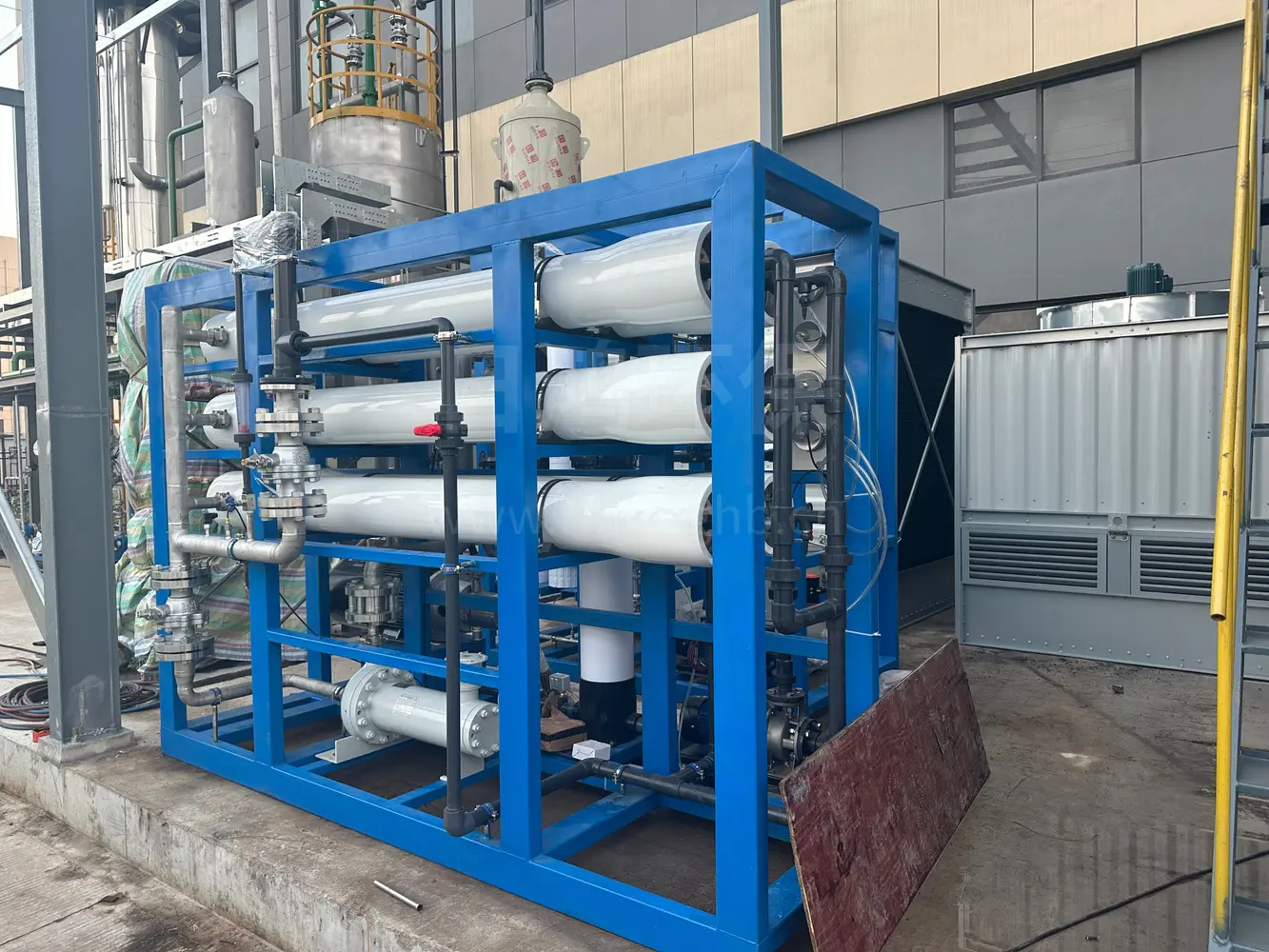
Reclaimed Water Reuse RO Reverse Osmosis System
As industrial water intake costs rise and discharge standards tighten, "less fresh water intake, less wastewater discharge" has become a rigid demand. Direct discharge of municipal reclaimed water or a company's own secondary treated effluent is both wasteful and consumes quota. Wushi Environmental launches the industrial reclaimed water reuse RO reverse osmosis system, with Ultrafiltration (UF) + Reverse Osmosis (RO) dual-membrane process as the core, stably converting reclaimed water into circulating cooling make-up water, process water, and even boiler feedwater, with recovery up to 70% – 85%. The concentrate can enter evaporation crystallization to approach zero liquid discharge, helping enterprises save water, reduce emissions, and lower costs.

Valveless Filter
Traditional rapid filters have many valves, complex operation, and rely on manual timing for backwashing, resulting in heavy O&M burden and prone to misoperation. The valveless filter uses the "siphon principle" to replace all valves, achieving a fully automatic filtration-backwash cycle without the need for dedicated personnel. It is an economical choice for rural water supply, industrial circulating water side-stream filtration, and advanced filtration for reclaimed water reuse.